
Scott

About Scott
Posts by :
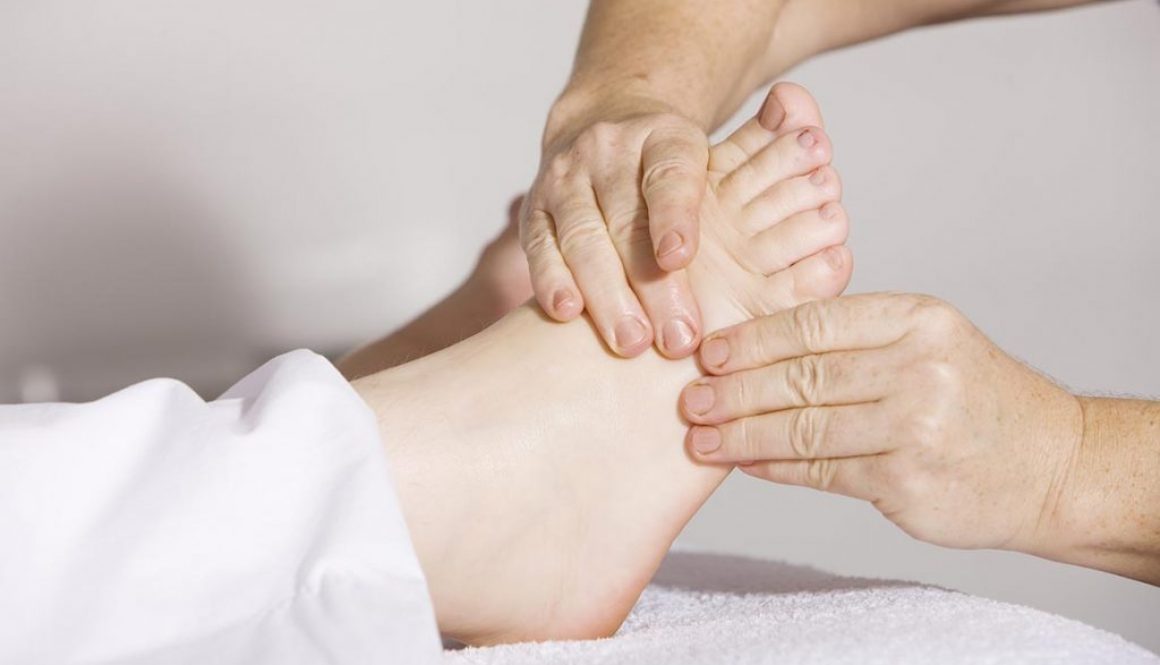
Stop Treating Your Plantar Fasciitis
Stop Treating Your Plantar Fasciitis
(Until you know what is causing it.)
So you’re active, and you have plantar fasciitis. You’ve stretched, strengthened, iced, heated, massaged, mobilized, medicated, electrocuted, foam-rolled, and dry needled. You’ve had your foot buttered with gallons of ultrasound gel, modified your gradually decreasing activity, and if it became painful enough, you even (gasp) briefly ceased training altogether. (Although you’d never admit that to your fitness tribe, because they all just suck-it-up too, right?).
Is that it? Is that all there is? Are you forever shackled to the Groundhog Day of Activity-Injury-Rehab-Repeat? If only some very smart people had given this some thought!
If only…
In 2008 the Journal of Orthopedic & Sports Physical Therapy (JOSPT) published clinical guidelines – recommendations only – compiling the best available evidence in the treatment of this bipedal pox, then updated it again in 2014. In it they evaluate a reasonably complete list of orthodox physical therapy interventions and grade each from ‘A’ to ‘F’ based on effectiveness according to research and evidence as follows:
A – Manual Therapy to include joint and soft tissue mobilization
A – Stretching
A – Taping
A – Foot Orthoses
A – Night Splints
D – Electrotherapy, including Low-level Laser, Phonophoresis, & Ultrasound
E – Education & Counseling for Weight Loss
(did you ever receive an ‘E’ in school? Me neither.)
F – Therapeutic Exercise & Neuromuscular Re-Education
(Not kidding – the evidence does not support PHYSICAL THERAPISTS spending much time here.)
F – Dry Needling
Options! Certainly there is some help in there somewhere, right?
Sadly, no. It is interesting to note that the duration of benefits even among interventions rated ‘A’ was nearly always short term:
A – Manual Therapy – benefits at 4 weeks but not 6 months
A – Stretching – short-term benefits in the first 1 week to 4 months
A – Taping – short term benefits for up to 3 weeks
A – Foot Orthoses – may reduce pain & improve function for up to 1 year
(Save your deductible, and just go to Wal-Mart. Really.)
A – Night Splints – recommend 1-3 month program (No study evaluating night splints followed benefits for more than 8 weeks.)
Does any of this sound familiar? Have you walked into a clinic where a zombie-like crowd was mindlessly pulling, pushing, squeezing, and being buttered with ultrasound gel or shocked with electrical stimulation?
And how long did that last? How many times did you show up only to get temporary relief?
I wonder — what if the angry, beat-up plantar fascia is not the problem? What if the foot and plantar fascia was working just fine, but the ankle, or hip, or even spine and ribcage started to change the way they move, and those compensations began to take a toll on the foot? What if we’re electrocuting, stabbing, and immobilizing the victim, that is, the plantar fascia, and not the villain of this story? What if we’re not working on the areas that need it such as the hips, knees, and ankles, and we’ve got it all backwards?
Don’t get me wrong — the recommendations above are helpful if used in the right sequence at the right time. Sometimes we’re just not going to make progress until the pain is addressed in the short-term. Unfortunately for many, when they walk into a clinic with (insert joint here) pain, the clinician evaluates only the joint pain and treats only that joint and only that pain without a whole-body systematic approach. This is like blaming a slow tire leak when your car isn’t running well because the leak is the most obvious thing and the easiest to fix. Yes, the mechanic needs to address the tire and do what she can to stop the leak, but the tire was never the real issue. In other words, many times the root cause of the problem can be quite a ways away from where the most obvious symptom is.
There is so much more that is likely contributing to your frustration. There is so much more improvement to be restored if we just take the time to really look for it.
There are answers. Tomorrow does not have to look like today. Step away from the cookie-cutter approach and get the systematic head-to-toe evaluation you need to leave the cycle of frustration behind. Performance, potential, skill, and technique are not one-size-fits-all. Neither should your medical care be.
Are you tired of the cycle of frustration, and ready to get back to your activities?
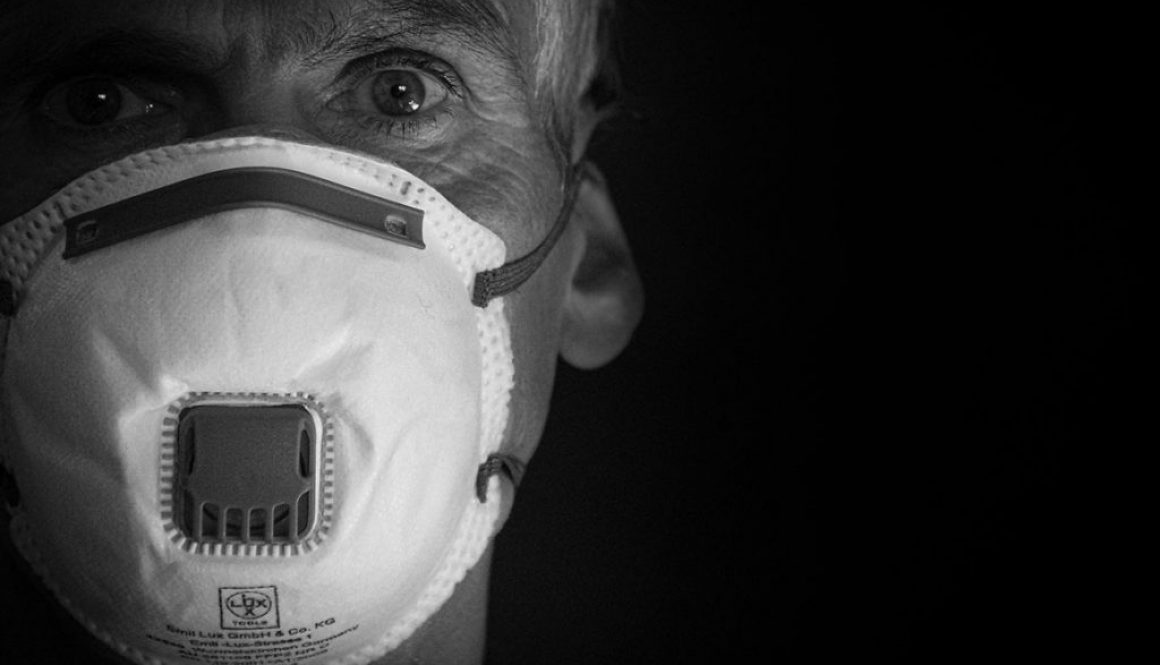
PPE-Induced Movement Dysfunction
For front-line Coronavirus healthcare workers face masks are critical components of personal protective equipment (PPE), and were vital in reducing the risk of contagion after exposure to SARS in 2003, PPE guidelines from both the World Health Organization (WHO) (2003) and the US Centers for Disease Control (CDC) (2004) determined face masks with a minimum 95% filtration efficiency are required for healthcare workers exposed to contagion droplets.
While few question the efficacy and need for respiratory protection among front-line healthcare workers of the COVID-19 pandemic, few are publicly discussing the physiologic demands and psychologic responses of those required to wear PPE face masks for long hours.
A brief review of just a few research articles demonstrates just how well documented are the physiological effects of dysfunctional breathing patterns.
“Alteration of cervicothoracic mobility impairs normal breathing mechanics by reducing diaphragm mobility and strength.”
(Chaitow, 2016)
“Abnormal respiratory patterns and pelvic floor and diaphragmatic function were observed. . . , together with an inability to consciously elevate the pelvic floor, in 9 subjects with a clinical diagnosis of sacroiliac joint pain.
(2007, O’Sullivan)
“Inefficient breathing [can] result in muscular imbalance, motor control alterations, and physiological adaptations that are capable of modifying movement.”.
(Bradley and Esformes, 2014)
“Preventing or slowing kyphosis progression may reduce the burden of pulmonary decline in older adults.”
(Lorbergs, 2017)
The consequences of biomechanical breathing dysfunction are well documented and include reduced ability to regulate intra-abdominal pressure, poor motor control, and poor spinal and postural stabilization support. These muscle imbalances, along with diminished motor control and stability, alter functional motor patterns of control and stability and eventually lead to neck and back pain, headaches, pelvic pain and even incontinence. In addition, breathing dysfunction plays several roles in physiological and psychological homeostatic regulation.
(Courtney, 2009)
Furthermore, it has been shown that N95 respirators and surgical facemasks microclimates surrounding the nose and mouth have profound influences on heart rate, thermal stress, and subjective perception of discomfort. This is due to increased CO2 retention, which can result in sympathomimetic anxiety related perceptions due to the release of neurotransmitters which manifests physically as elevated heart rate and respiratory rate, palpitations,and elevated blood pressure.
(Cheung, 2010)
In reviewing the literature, the evidence is clear: in today’s world-wide pandemic environment, the increased and prolonged respiratory load due to chronic PPE requirements have the potential to create significant physical and psychological barriers under already stressful conditions. Underlying physiologic and psychologic dysfunctions which are usually “silent” under normal daily processes and operations, are suddenly exposed and lead to increased musculoskeletal pain and fatigue, increased heart-rate and metabolism, and even sympathetic distress and feelings of anxiety and claustrophobia. This can significantly impair your ability to maintain mental and physical preparedness when your team and your patients need it most.
The good news is that clarity and course correction are available to you right now. As complex as the interplay between biochemical, biomechanical, and psychophysiological dimensions is, a simple functional online breathing assessment can rule out breathing dysfunction with 89% certainty. Even better, if the assessment is failed, further systematic assessment and corrective biomechanical interventions are immediately prescribed, allowing you to gain control of your breathing dysfunction and find a clear path to success..
Are you experiencing symptoms of stress, anxiety, and fatigue that may be related to underlying breathing dysfunction? Are you wondering if your N95 respirator or surgical mask could be enhancing feelings of claustrophobia, or creating physical symptoms such as headaches, back and pelvic pain, and even incontinence? Contact Virtue Medicine now for your functional breathing assessment and corrective prescription. Get clear answers and get back into the game.

Mid-Victorian Activity, Nutrition, and Disease
Ghosts of Wellness Past
Want to nearly eliminate your risk of cancer & CVD, & eat/move 2x as much as you do now? Mid-1800 Victorian UK did it. Here’s how.
The mid-1800s of the Victorian period in the U.K. was a renaissance of health and wellness. Both men and women ate and moved twice as much as we do today, experiencing little in the way of degenerative disease, and lived at least as long as we do without our medical advancements.
According to the authors, this was due primarily to two things: diet and physical activity.
Average physical activity and among both men and women sounds like the legendary tales our grandparents told. Walking 6 miles to and from work, which was not sitting in a cubicle crunching data on excel spreadsheets, but real, physically demanding labor. Among working-class men, caloric expenditures averaged between 3500 and 4000 daily, and among women between 2,750 to 3,500. This is an average of approximately 330 calories per hour.
The diet common the working-class was just as remarkable, consuming approximately 10 servings (far beyond our government RDAs) per day of organically grown, seasonally available, phytonutrient-rich vegetables, free-range nutrient-dense meats and offal including “brains, heart, sweetbreads, liver, kidneys and ‘pluck’,(the lungs and intestines of sheep).” Wild-caught fatty fish was abundant and shipped in daily from coastal towns, and eggs from the hens living in the back-yard were also common. In short, the authors surmise, nutritional strategies were likely in the vein of the Mediterranean and Paleolithic diets, yet still far superior in nutrient density. (Consider: a single ounce of beef liver contains 277% of the USRDA of vitamin B12, 45% of riboflavin, 95% of vitamin A, and 20% of folate, while providing almost 6g of protein. But, will that get you to eat it?)
Incredibly, this appears to have nearly eliminated most diseases we consider commonplace today. Unlike our current cultural diseases, nearly 80% of deaths during the mid-1800s were due to infections, accidents, and trauma. Just over 20% of deaths during this time were due to diseases of the respiratory and circulatory system, and cancer. Neoplasms were so uncommon that lung cancer was described by a physician as ‘… one of the rarer forms of a rare disease. You may probably pass the rest of your students life without seeing another example of it.’ Conversely, and strikingly, over 100 years later nearly the precise reverse became true. In 1997 nearly 80% of deaths in the U.K. and Wales were due to those same diseases that were so rare just over a century prior. And this. even with all the modern medical advances available.
So, what do the author make of all this? To paraphrase:
- Degenerative diseases are the result of low-energy lifestyles, excessive intakes of inflammatory compounds, and dietary nutrient depletion. They suggest that degenerative disease is not caused by old age, but ultimately by lifestyle and environmental factors.
- The mid-Victorians demonstrate that medical advances are not responsible for prolonging our lifespan, they have merely slowed our deaths due to degenerative diseases that were nearly non-existent. A ounce of prevention. . .
- Finally, we must pursue highly nutrient dense foods that are also low in caloric density.
Bold claims. Taken together, the advice here is quite accessible: move often, and eat well. Clearly, however, considering the current obesity epidemic and associated diseases, this is easier said than done. This reminds me of a quote by Gilbert Keith Chesterton, a 19th century philosopher, who said, “The Christian ideal has not been tried and found wanting. It has been found difficult; and left untried.”
One might say the same of the Wellness Ideal.
Are you tired of being frustrated? Are you ready to get back to your favorite activities?
Click the schedule button below, get off the merry-go-round, and let’s get moving again.
Fortis es,
Dr. Scott